

When you begin to notice changes in your parent’s daily habits, it can raise many quiet concerns. Meals may become inconsistent. Sleep patterns shift. Activities they once enjoyed may fall away. These small disruptions often point to something simple but important: a lack of steady routine.
A consistent daily rhythm supports physical health, emotional balance, and cognitive well-being. That’s what your loved one gets in assisted living—a lifestyle built to provide that structure while preserving independence. With the right level of support in place, your loved one can experience a day that feels steady, engaging, and manageable.
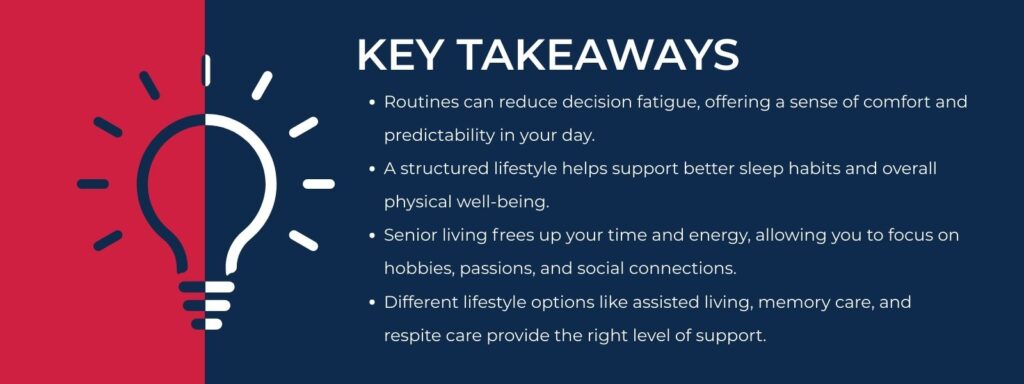
Key Takeaways
- A consistent daily routine supports physical, emotional, and cognitive well-being for older adults.
- Predictable mealtimes, movement, and sleep schedules improve overall health and energy levels.
- Repetition and structured engagement help reinforce memory and support cognitive wellness.
- Families can build better routines at home through consistent anchors, planned social time, and meaningful activities.
- Assisted living communities provide built-in structure, support, and social opportunities that maintain independence.
Why Routine Is Important for Older Adults
As people age, predictability becomes more valuable. A steady routine removes unnecessary stress and makes everyday life easier to manage. Even small, consistent habits can create a stronger sense of stability and control.
The Physical Benefits
Routine supports better overall health. Consistent mealtimes make it easier to maintain proper nutrition and hydration. Regular movement, even gentle exercise, helps preserve strength and balance. A predictable sleep schedule also improves rest, which affects everything from mood to energy levels.
The Emotional Benefits
Knowing what to expect each day reduces anxiety. When your loved one doesn’t have to wonder what’s next or worry about managing every detail, it creates space for comfort and confidence. That’s one significant value of life in assisted living—the sense of belonging supports emotional stability and reduces feelings of isolation.
The Cognitive Benefits
Structure benefits the mind as well. Repetition reinforces memory and helps reduce confusion, and predictable patterns make it easier to follow through on tasks and responsibilities. Over time, that steady engagement helps support cognitive wellness.
How to Help an Older Loved One Build a Better Routine
If you’re supporting a loved one, creating structure doesn’t require dramatic change. It starts with small, intentional patterns that make each day easier to navigate.
Establish Consistent Morning and Evening Rhythms
The beginning and end of the day set the tone for everything in between. Encouraging your loved one to wake up and go to bed at roughly the same time each day helps regulate sleep, mood, and energy levels. A simple sequence becomes a reliable anchor, even if it’s something as simple as drinking coffee at the same time in the same place.
Encourage Gentle Physical Activity
Movement doesn’t have to be strenuous to be effective. Short walks, stretching, or light exercise classes can become part of a weekly schedule. If you can make movement part of their routine rather than an occasional effort, it’s more likely to stick.
Schedule Social Connection on Purpose
Connection shouldn’t be left to chance. Set recurring times for family visits, video calls, or lunch with a neighbor. When interaction becomes predictable, it’s easier for your loved one to prepare for it and look forward to it.
Encourage Activities That Reinforce Purpose
Purpose doesn’t need to be grand. It simply needs to feel personal. Routine feels meaningful when it includes something that matters. That might mean preparing a favorite recipe, tending to a small garden, organizing family photos, or mentoring a grandchild.
Simplify Daily Decisions
Too many choices can quietly drain energy. Planning outfits in advance, preparing a weekly meal outline, or organizing medications ahead of time reduces unnecessary decision-making. By making daily life simpler, you’re giving your loved one more energy in the moments that matter.
How Senior Living Supports Your Loved One’s Routine
While building routine at home is possible, assisted living communities are intentionally structured to provide a daily rhythm without removing independence. Every element of the environment is designed to create stability.
Assisted living offers residents:
- A thoughtfully planned daily activity calendar
- On-site fitness and wellness programs
- Medication reminders and support
- Built-in social opportunities throughout the week
- Assistance with housekeeping and daily tasks
- Regular, chef-prepared meals served at predictable times
In assisted living, your loved one can focus on connection, activity, and personal interests without any limitations. That means they can live life on their terms, and that’s invaluable.
Help Your Loved One Live the Life They Deserve
Routine is not restrictive. It’s grounding. For older adults, steady structure creates comfort, supports health, and encourages meaningful engagement. With the right environment, your loved one can experience a day that feels balanced and purposeful.
At All American Assisted Living at Tinton Falls, we provide supportive daily structure while respecting your loved one’s independence. Here, life is about choices and helping your loved one thrive every day. Schedule a tour today to see how assisted living can support your loved one’s daily routine.