
Key Takeaways
- Wet floors and hard surfaces make bathrooms one of the trickiest rooms in any home.
- Grab bars, textured flooring, and good lighting can help lower the risk of slips.
- Shower seats, handheld shower heads, and raised toilet seats add everyday comfort.
- Water set to 120°F or lower and supplies at arm level support easier bathing.
- Assisted living suites may include accessible design, call buttons, and discreet daily help.
Safer Bathrooms Help Protect Everyday Independence
You’ve probably noticed how quickly a bathroom floor turns slick after a shower. Add a tight space, a few hard corners, and a bathrobe to reach for, and one of the smallest rooms in the home becomes one of the trickiest. If you’re worried about a parent bathing alone, that worry makes sense.
A few thoughtful changes, including grab bars, non-slip surfaces, bright lighting, and helpful bathing tools, can make the bathroom a place where your loved one can move more comfortably while maintaining their privacy.
Why the Bathroom Deserves Extra Attention
Water lands on tile, soap gets slippery, and there’s rarely a soft place to land. Sinks, tubs, and countertops sit at just the wrong height when balance shifts. Most bathrooms were also designed for one person moving quickly, not for someone using a walker.
Balance and mobility naturally change with age. Standing up from a low toilet seat, stepping over a tub wall, or turning around in a narrow space can take more effort than it used to.
Still, this is a private room, and that privacy matters. The goal isn’t to take over someone’s routine. It’s to set up the space so your loved one can keep doing things their own way, safely.
Simple Safety Features that Make a Difference
Grab Bars & Support Rails
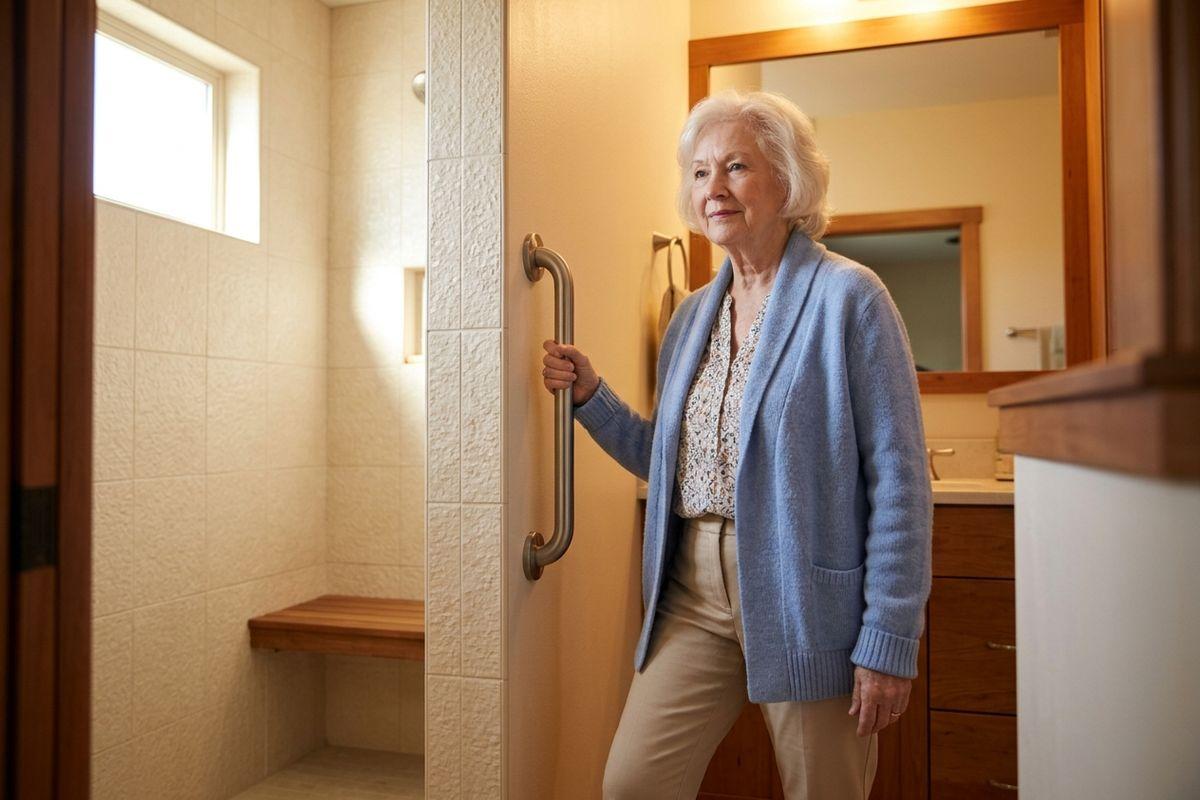
Grab bars give hands something solid to hold when feet feel unsure. Place them beside the toilet, inside the shower, and just outside the shower entrance where wet floors begin.
Height and installation matter as much as placement. Bars should sit within a comfortable reach and be anchored into wall studs or backing to provide secure support.
Towel bars, soap dishes, and shower curtain rods aren’t supported. They can pull free when leaned on. It’s a reminder worth repeating often.
Non-Slip Floors & Mats
Loose rugs slide and bunch under walker wheels. Textured adhesive strips inside the tub and a rubber-backed mat outside it can improve traction without creating another tripping hazard.
Wipe up water and spills right away. A quick pass with a towel after each shower can help keep puddles from collecting where the next person steps.
Bright Lights & Clear Pathways
Middle-of-the-night trips are easier when the room lights itself. Motion-activated fixtures or a soft night light along the path can help your loved one see each step without fumbling for a switch.
Clear floor space matters just as much. Leave enough room for a walker or wheelchair to turn, and keep hampers, trash cans, and storage bins out of the walking path.
Helpful Bathroom Devices for Daily Comfort
Small tools can take a lot of strain out of bathing. Depending on the person’s needs and the bathroom setup, a few worth considering include:
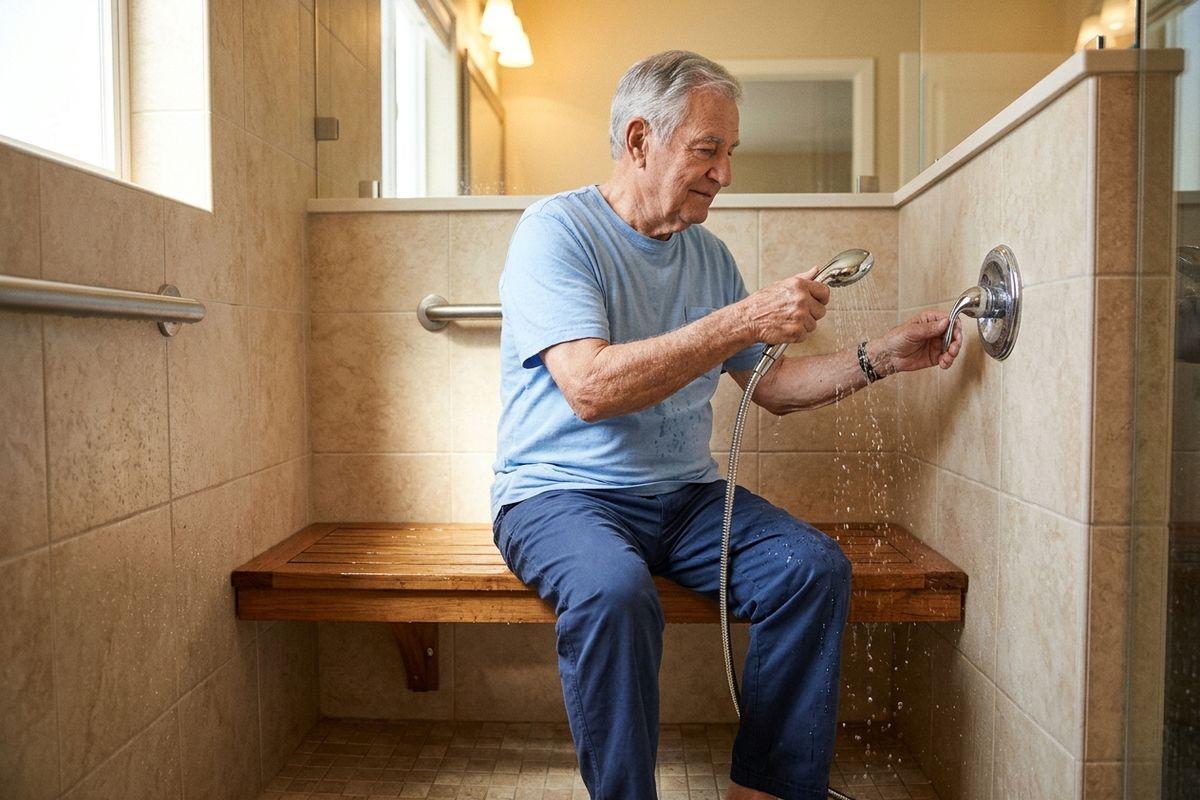
- Shower seats or transfer benches, so bathing happens sitting down instead of standing on wet tile.
- Handheld shower heads, which bring the water where it’s needed without twisting or reaching.
- Lever-style faucet handles that turn with a push instead of a tight grip.
- Raised toilet seats with armrests, making it easier to sit down and stand back up.
Habits for Safer Bathing
Water Temperature Awareness
Consider setting the water heater to 120°F or lower to help reduce the risk of overly hot water.
Then check the water with a hand or forearm before stepping in. This simple check can help make sure the water feels comfortable before bathing.
Supplies Within Easy Reach
Keep towels, shampoo, and soap at arm level, close to where they’re used. Reaching overhead, bending toward the floor, or climbing on a step stool are all moments where balance can shift.
A shower caddy hung at chest height keeps everything within reach and off the tub floor.
Shower Routines & Frequency
Daily showers aren’t always needed. Bathing routines can vary from person to person, depending on skin, mobility, personal preference, and care needs.
If showering every day isn’t comfortable or practical, a sponge bath at the sink can be another option between showers. Fewer transfers in and out of the shower may also make the routine feel more manageable.
How Assisted Living Supports Bathroom Safety
Accessible Suite Design
In assisted living, bathroom features can be designed with accessibility in mind. Suites may include grab bars, walk-in showers with no tub wall to step over, and space designed for walkers and wheelchairs.
Call buttons can provide a way to request assistance when it’s needed.
Personalized Care & Team Support
The team offers help with bathing, grooming, and dressing, matched to how much support each person actually wants. Your loved one keeps their routine and their dignity, including help with daily activities as needs change.
Senior living options can also include different levels of support as needs change, including memory care for those living with cognitive changes and respite care for short-term stays after a hospital visit or surgery.
A Safer Bathroom, a Fuller Life
Bathroom safety isn’t about taking away independence. It’s about creating a space where your loved one can feel comfortable, capable, and supported.
At All American Assisted Living at Tinton Falls, that philosophy extends beyond the bathroom. Residents can enjoy their routines, interests, and community life while getting personalized support when they need it. With 24-hour on-site staff, help is always close by.
Contact us to learn more about life in our community.