
Key Takeaways
- Thirst naturally weakens with age, making dehydration easier for older adults to overlook.
- Common dehydration symptoms include dark urine, fatigue, dizziness, headaches, confusion, and low energy.
- Building hydration into daily routines can help seniors drink fluids more consistently.
- Fruit-infused water, herbal teas, broths, and water-rich foods can make hydration more appealing.
- Families and caregivers can support hydration through gentle reminders and accessible drink options.
- Assisted living communities help support hydration with structured schedules, wellness monitoring, and social dining routines.
Why Hydration Matters More Than You Think
You probably know that drinking enough water is important, but for older adults, staying hydrated can be trickier than it looks. The body changes with age, and those changes make it easier to fall short on fluids without even realizing it. Because thirst changes naturally with age, many seniors may not realize they are drinking less water than their bodies need.
The good news is that a few thoughtful adjustments can go a long way toward keeping your loved one feeling their best each day. From simple habit shifts to the right kind of support through healthy daily habits, there are plenty of ways to make hydration a natural part of everyday life.
Why Hydration Becomes Harder with Age
One of the biggest challenges is that the body’s thirst signals naturally weaken over time. Your loved one may genuinely not feel thirsty, even when they need more fluids. That makes it easy to go hours without drinking anything at all. But over time, even mild dehydration can affect energy, comfort, and overall wellness.
There’s also a physical side to this. As people age, muscle mass decreases, and muscle tissue holds water. Less muscle means less water stored in the body to begin with. Some medications can also increase fluid loss throughout the day, which adds another layer to the challenge.
Signs Your Loved One May Not Be Drinking Enough
Dehydration does not always look obvious at first. Some symptoms develop gradually, which can make them easier to overlook during day-to-day routines.
Physical Warning Signs
Dehydration often causes physical symptoms before families realize there is a problem. Dark urine, dry mouth, headaches, dizziness, and sudden fatigue can all point to low fluid intake. Some older adults may also feel weaker than usual or experience muscle cramps throughout the day.
Cognitive And Energy-Related Symptoms
Hydration also affects focus, mood, and energy levels. Older adults who are dehydrated may seem unusually tired, forgetful, irritable, or withdrawn. In some cases, dehydration can contribute to confusion or difficulty concentrating, especially during hot weather or illness.
Simple Ways to Help Seniors Stay Hydrated
Small adjustments throughout the day can make hydration feel easier and more natural. The goal is to build simple routines that fit comfortably into everyday life.
Make Drinks More Appealing
Not everyone enjoys drinking plain water all day long. Adding lemon, cucumber, berries, or frozen fruit can make water feel more refreshing without adding excess sugar. Herbal teas and warm broths are also good options, especially during colder months.
Build Hydration Into Daily Routines
Hydration habits tend to stick better when they become part of an existing routine. Drinking a glass of water after waking up, with meals, or before leaving the house creates natural reminders without making hydration feel forced. Simple consistency often works better than large changes all at once.
Keep Water Accessible Throughout the Day
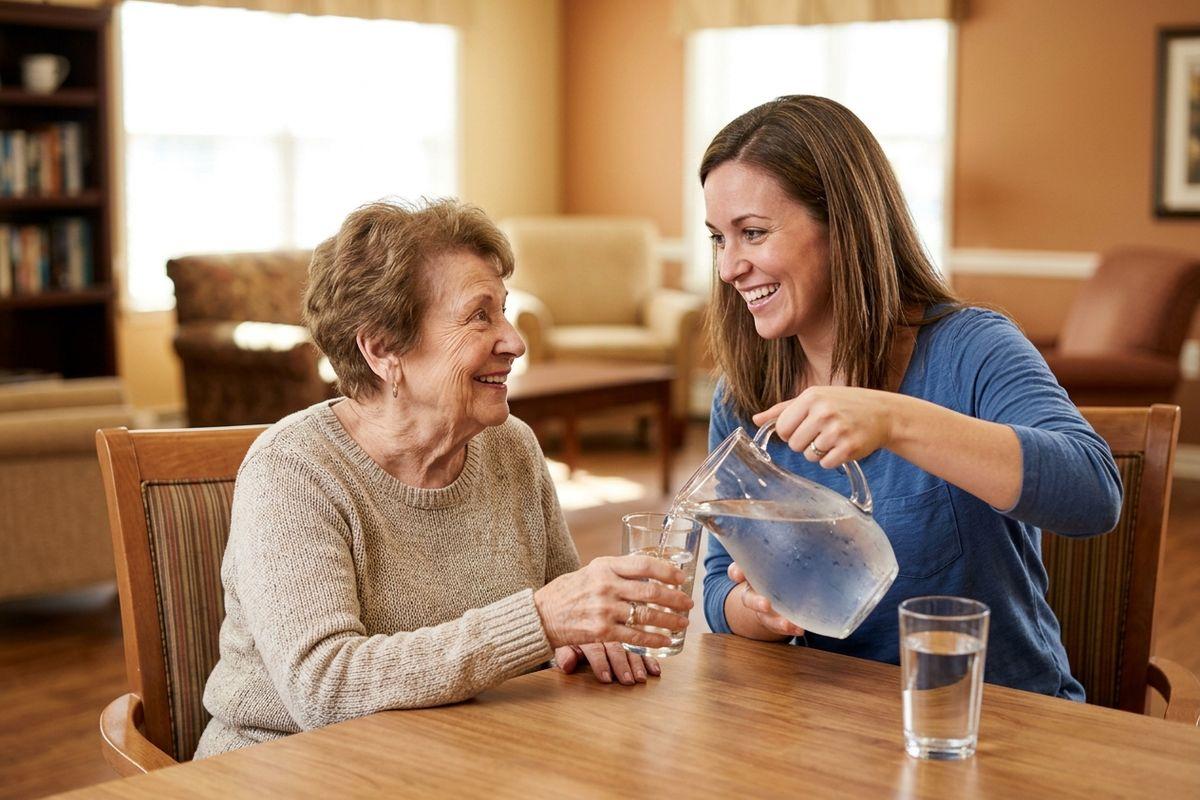
Accessibility matters more than many people realize. If mobility is limited, walking across the house for a drink may feel like an unnecessary effort. Keeping a water bottle or lightweight pitcher nearby removes that barrier and makes hydration more convenient. When water is within sight, older adults are more likely to take small sips throughout the day.
Include Water-Rich Foods at Meals
Hydration does not only come from beverages. Many foods naturally contain high amounts of water and can help support fluid intake during meals and snacks.
Some helpful options include:
- Watermelon
- Cucumbers
- Oranges
- Strawberries
- Celery
- Broth-based soups
Adding these foods into regular meals can quietly support hydration without requiring major lifestyle changes.

How Families and Caregivers Can Support Healthy Hydration Habits
Families and caregivers often play an important role in helping older adults maintain healthy routines. Gentle encouragement throughout the day can help hydration feel supportive instead of stressful or repetitive.
It also helps to pay attention to changes in mood, energy, or daily behavior. If your loved one suddenly seems more fatigued or confused than usual, dehydration may be contributing to the issue. Small reminders during meals, activities, or outings can help encourage steady fluid intake without creating frustration.
How Assisted Living Communities Support Daily Hydration
Assisted living communities help support hydration by creating consistent daily routines that encourage healthy habits naturally. Structured schedules, attentive wellness support, and social dining environments can all make it easier for older adults to drink enough fluids throughout the day.
Assisted living offers:
- Regular meals and beverage opportunities throughout the day
- Wellness teams that notice changes in eating or drinking habits
- Easy access to water, tea, and other beverages
- Support for residents with mobility challenges
- Daily routines that encourage consistency
- Social dining experiences that naturally promote fluid intake
For many families, that added structure and support can provide valuable peace of mind.
Healthier Life Awaits Your Loved One
Healthy hydration habits can support comfort, energy, focus, and overall wellness as people age. While dehydration is common among older adults, small daily routines and thoughtful support can make a meaningful difference over time.
At All American Assisted Living at Tinton Falls, we understand how important everyday wellness habits are for helping residents feel their best. Our supportive environment encourages healthy routines while helping families feel confident their loved ones are receiving attentive, compassionate care. Schedule a tour at All American Assisted Living at Tinton Falls today to learn more about our supportive lifestyle and wellness-focused care.