
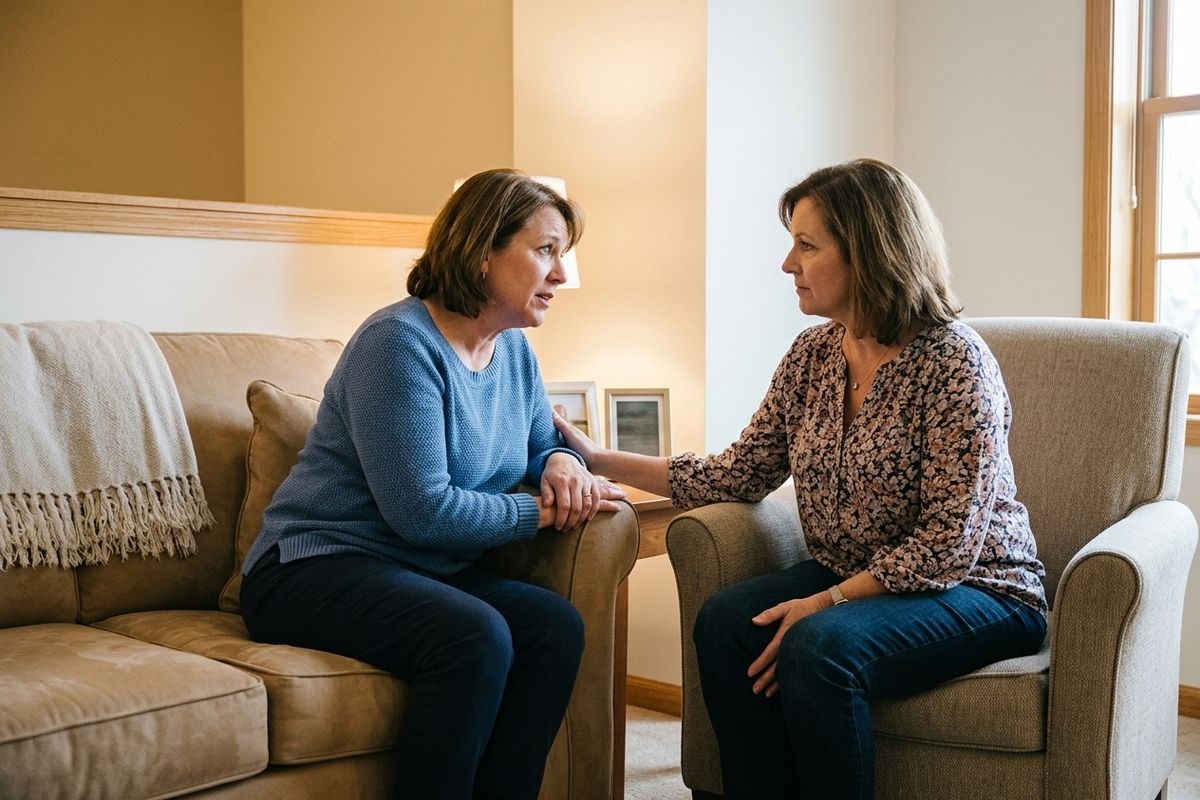
A pair of adult family caregivers offer each other comfort and support as they express signs of caregiver stress.
Key Takeaways
- Caregiver burnout builds gradually through distinct stages, from mild fatigue to full emotional and physical exhaustion
- Even the most devoted and capable caregivers can reach a point of unmanageable fatigue without regular breaks and support
- Recognizing the warning signs early can give you the chance to get support to protect your health and your loved one’s care
- Respite care, assisted living, and memory care offer different levels of support that can benefit the whole family
The Signs That Something Is Off
Caring for a loved one is a profoundly meaningful journey. But the emotional and physical weight of responsibilities can quietly grow until even the smallest tasks feel overwhelming. Too often, dedicated caregivers don’t realize they are running on empty until burnout has already set in.
Caregiver burnout is a state of deep physical, mental, and emotional exhaustion that happens when you give so much of yourself that there is simply nothing left for your own needs.
At All American Assisted Living at Tinton Falls, we know how much heart you pour into your family—and we know you shouldn’t have to carry it alone.
Knowing what the signs of caregiver fatigue look and feel like is the first, vital step toward reclaiming your own wellness. Preventing caregiver fatigue is as much a gift to your loved one and family as it is to you.
What Caregiver Burnout Actually Looks Like
Burnout doesn’t always look dramatic. Sometimes it shows up as snapping at someone you love or canceling plans you used to look forward to. Other times, it feels like a heaviness that follows you everywhere, even after a full night of sleep.
Common signs to watch for include:
- Feeling physically drained, emotionally flat, or mentally foggy all at once
- Pulling away from friends, hobbies, or activities that once brought joy
- Ongoing irritability, worry, or a sense that everything is too much
These feelings don’t mean you’re failing. They mean you’re human, and your body is asking for support. The signs of caregiver stress are worth reviewing and understanding. Prioritizing your own health and well-being helps you show up as your best self for your loved one.
The 4 Stages of Caregiver Burnout
Stage 1: Early Warning Signs
In the early stage, burnout can feel like ordinary tiredness. You might notice low energy even after resting, or a mild sense of resentment that you quickly push aside. It’s easy to dismiss these signs as temporary, but they’re worth paying attention to.
Stage 2: Worsening Stress and Withdrawal
As stress builds, the effects can become harder to ignore. Sleep patterns shift, moods swing are more frequent, and self-care starts slipping. You might also find yourself pulling back from the very people who want to help, which only deepens the isolation and potential health risks.
Stage 3: Full Burnout
At this stage, emotional numbness or hopelessness can set in. Tasks that once felt manageable may now feel impossible. Your physical health can also begin to decline, with headaches, illness, or persistent exhaustion becoming more frequent.
Feeling “burnt out” isn’t a sign of failure; it’s a signal that something needs to change.
Why Burnout Happens to Devoted Caregivers
Too Much on One Person’s Plate
When one person takes on the majority of caregiving responsibilities without a break, exhaustion is a natural outcome. Many caregivers hesitate to ask for help because it feels like admitting defeat.
But asking for support is one of the most caring things you can do, for your loved one and for yourself.
Role Confusion and Shifting Family Dynamics
It can be difficult to separate your role as a caregiver from your identity as a son, daughter, or spouse. When multiple family members are involved, unclear responsibilities can create tension and add to the stress.
Honest conversations about who does what can bring real relief to everyone involved. It can also help to explore how to talk openly as a family about assisted living care before things feel urgent.

An older adult and their family loved one sit comfortably together in a welcoming assisted living community.
Ways to Support Yourself Before Burnout Takes Over
You don’t have to wait until you’re overwhelmed to make a change. Small, consistent steps can help you stay grounded and keep giving your loved one the care they deserve.
- Accept help from others and share caregiving tasks where possible
- Protect time for sleep, nourishing meals, and your own health
- Look into respite care for short-term relief when you need a real break
Taking care of yourself isn’t selfish. It’s what makes it possible to keep showing up for the person you love.
When It Might Be Time to Explore Senior Living Options
Signs the Current Setup Isn’t Sustainable
Sometimes, a loved one’s needs grow beyond what one person or family can safely manage at home. If your own health is suffering, your relationships are strained, or you find yourself constantly worried about their safety, it may be time to consider other options.
How Assisted Living and Respite Care Can Help
Moving to a senior community isn’t a step back. It’s a step toward a fuller life for everyone involved. There are warm, welcoming environments designed specifically to support older adults with the care and connection they need.
- Assisted living can offer daily support alongside a vibrant, engaging community
- Respite care can give family caregivers a chance to rest, recharge, and breathe
- Memory care provides structured, compassionate support for cognitive challenges
A Brighter Path Forward for Your Family
Recognizing burnout is the first step toward support that can make a real difference. At All American Assisted Living at Tinton Falls, our team is here to support both residents and the families who love them.
Whether you’re exploring assisted living, memory care, or respite care, there’s a path forward that honors your loved one and takes care of you, too. Reach out today to schedule a tour and see what’s possible.