Key Takeaways
- Ask about staff training, consistency, and how caregivers handle challenging behaviors
- Look for safety features designed specifically for memory loss, including secure spaces and navigation
- Find out how care plans are created, updated, and personalized to your loved one
- Ask about meals, enriching activities, and how families can stay involved in daily life
- Understand the costs, what’s included in those costs, and trust what you observe during the tour
The Right Questions Can Make All the Difference
Touring a memory care community can feel overwhelming. You want to get it right, but it’s hard to know what to look for when so much is new. Walking through a space and meeting staff is a start, but the real picture comes from the questions you ask along the way.
Knowing exactly what to ask during a memory care tour helps you find a community where your loved one can feel safe, supported, and genuinely at home.
A compassionate community is there to help give families peace of mind. Our guide can walk you through the key questions to bring with you so you can feel confident about your family’s decision.
What to Look for in Staffing and Dementia Care Training
Staff Qualifications and Consistency
The people caring for your loved one matter more than almost anything else. Ask about dementia-specific training and whether caregivers have completed any formal certifications.
It’s worth finding out if the same staff members are assigned to residents daily, since familiar faces can make a real difference for someone with memory loss.
Ask about staff-to-resident ratios on each shift, including overnight. A smaller ratio means more time and attention for each person.
How Staff Handle Difficult Behaviors
Memory loss can sometimes bring moments of agitation or confusion. Ask how caregivers are trained to respond in those situations. A thoughtful, calm approach rooted in compassion is a strong sign that the team truly understands dementia care.
Find out if ongoing training is a regular part of the job. Communities that invest in continued education for their staff can deliver more consistent, attentive care.
Safety Features and Community Design
Physical Safety Measures
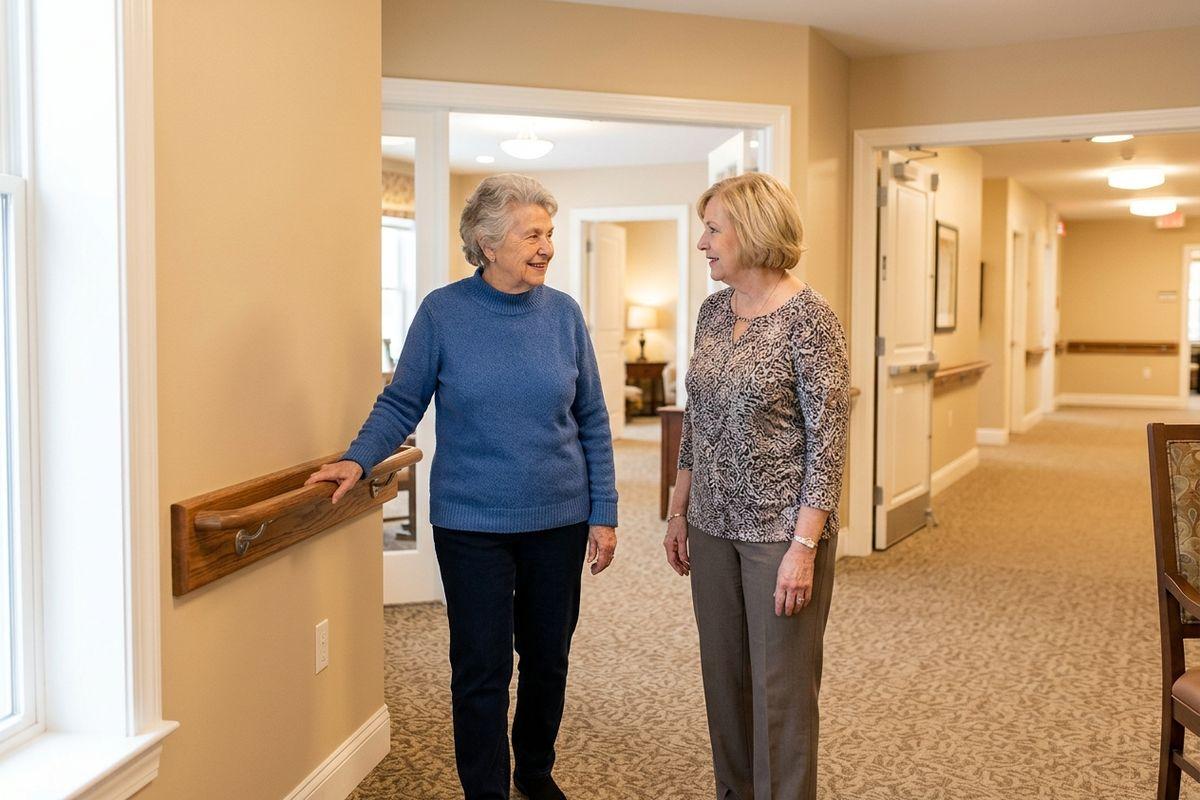
Safety is a top priority in memory care. Look for secured entries, door alarms, and enclosed outdoor spaces where residents can enjoy fresh air without wandering risks. Ask about fall prevention features like grab bars, nonslip flooring, and well-lit common areas.
Ask about wandering management systems. These tools can offer real peace of mind for families while protecting residents who may lose track of where they are.
Layout and Navigation
The physical design of a community plays a big role in how comfortable and oriented a resident feels day to day. Ask if the space was designed with cognitive decline in mind and look for wide, easy-to-navigate hallways with clear visual cues.
Color-coded paths, familiar landmarks, and consistent room layouts can help residents move through their day with ease and independence. You can even explore floor plan options ahead of time to get a sense of the space before you visit.
Personalized Care Plans and Daily Life
Care Assessments and Plans
Every person living with memory loss has a unique story, history, and set of needs. Ask how the community creates individual care plans and how often those plans are reviewed and updated.
Find out who is involved in that process, whether that includes family members, physicians, or care coordinators.
A personalized approach means your loved one’s care can grow and adjust as their needs change over time. Understanding the difference between assisted living and memory care can also help you ask the right questions about the level of support available.
Activities, Therapies, and Engagement
Meaningful daily engagement can have a positive impact on mood, memory, and overall well-being. Ask about memory-supportive therapies like music, art, or reminiscence activities. Find out if programs are tailored to individual interests rather than a one-size-fits-all schedule.
Ask how the community encourages residents to take part each day. A warm, inviting activity culture is something you can often feel just by walking through the door, and you can get a preview by reviewing upcoming community events and programs.
Dining, Amenities, and Family Involvement
Meals and Nutrition
Good nutrition supports both physical health and cognitive function. Ask how many meals and snacks are offered throughout the day and whether dining times are flexible. Find out if menus can be adjusted to meet specific dietary needs or personal preferences.
Mealtime is also a social experience, so ask about the dining atmosphere and how staff supports residents who may need a little extra help at the table.
Family Connection and Involvement
Your involvement doesn’t stop after move-in. Ask about visiting hours and how the community communicates care updates to families. Find out if loved ones can join for meals, celebrations, or everyday events.
Staying connected is good for everyone, and a community that welcomes family participation is one that truly values the whole person. If you’re still navigating those early conversations, this guide on talking to your loved one about senior living can help.
Costs, Next Steps, and Trusting Your Instincts
The Costs of Memory Care
Ask clearly what is included in the monthly fee and what might cost extra as care needs increase. Understanding the financial picture upfront helps your family plan without surprises down the road.
It’s also worth exploring financial support options that may be available to help cover care costs.
What to Notice After the Tour
Pay attention to how staff interacts with current residents. Notice whether residents seem at ease, engaged, and treated with warmth. Those quiet moments often tell you more than any brochure can.
Visit Our Community
At All American Assisted Living at Tinton Falls, our team would love to walk you through the community and answer every question on your list. Reach out today to schedule your tour and take that important next step for your loved one.