

Key Takeaways
- Familiar routines can help reduce confusion and anxiety for seniors living with dementia.
- Structured daily schedules support emotional comfort, sleep, and physical wellness.
- Consistent activities encourage social interaction and daily engagement.
- Morning, afternoon, and evening routines help create predictability throughout the day.
- Memory care communities balance structured activities with quiet time and rest.
- Personalized care plans and consistent caregivers help routines feel more familiar and supportive.
Routine and Memory Care: What You Should Know
When a loved one is living with dementia, even simple days can feel overwhelming without the right support. Familiar surroundings help, but there’s something else that makes a real difference: a reliable daily routine. Knowing what comes next in the day brings a quiet sense of safety that words sometimes can’t offer, and when dementia is involved, that’s invaluable.
Routine plays a central role in memory care because it creates a predictable, calming framework that helps reduce confusion, lower anxiety, and support your loved one’s overall well-being. It’s not about a rigid schedule, but about offering comfort through consistency, day after day. Structured schedules help reduce confusion, support emotional well-being, and create a calmer daily rhythm for seniors living with dementia.
Why Routine Matters for Those with Dementia
As memory shifts, a person’s ability to recall recent events can fade. But long-held habits, like brewing morning coffee or sitting in a favorite chair after lunch, tend to stay accessible for much longer. That’s one of the reasons familiar patterns are so powerful in memory care. Repeating the same general flow each day can help seniors feel more comfortable in their surroundings and more confident moving through daily activities.
Predictability can ease the daily anxiety that often comes with dementia. When your loved one knows what to expect, there’s less room for confusion to take hold. That emotional calm is something routine quietly builds over time. It creates stability while still leaving room for meaningful engagement, social interaction, and individualized support.
The Key Benefits of a Structured Daily Schedule
A consistent daily schedule supports more than organization alone. In memory care, routines help create a calmer environment while encouraging participation, engagement, and emotional comfort throughout the day.
Emotional Comfort and Reduced Anxiety
A consistent schedule can help reduce agitation and restlessness throughout the day. When moments of uncertainty are replaced with familiar activities, your loved one has less reason to feel unsettled. That steadiness shows up in mood, behavior, and overall comfort. Over time, consistent patterns may help residents feel calmer and more comfortable in their environment.
Better Sleep and Daily Rhythm
Consistent wake-up times, meals, and bedtime routines help support healthier sleep patterns. When the body follows a steady rhythm each day, evenings may feel less disruptive or confusing. Structured nighttime routines can also help create a calmer atmosphere before bed, and that supports improved mood and engagement during the day.
Physical Wellness and Daily Participation
Structured schedules encourage seniors to stay active and involved throughout the day. Regular meals, movement, hydration, and personal care routines all play an important role in overall wellness. Gentle physical activity and consistent routines can also help residents maintain greater independence with certain daily tasks.
More Engagement Throughout the Day
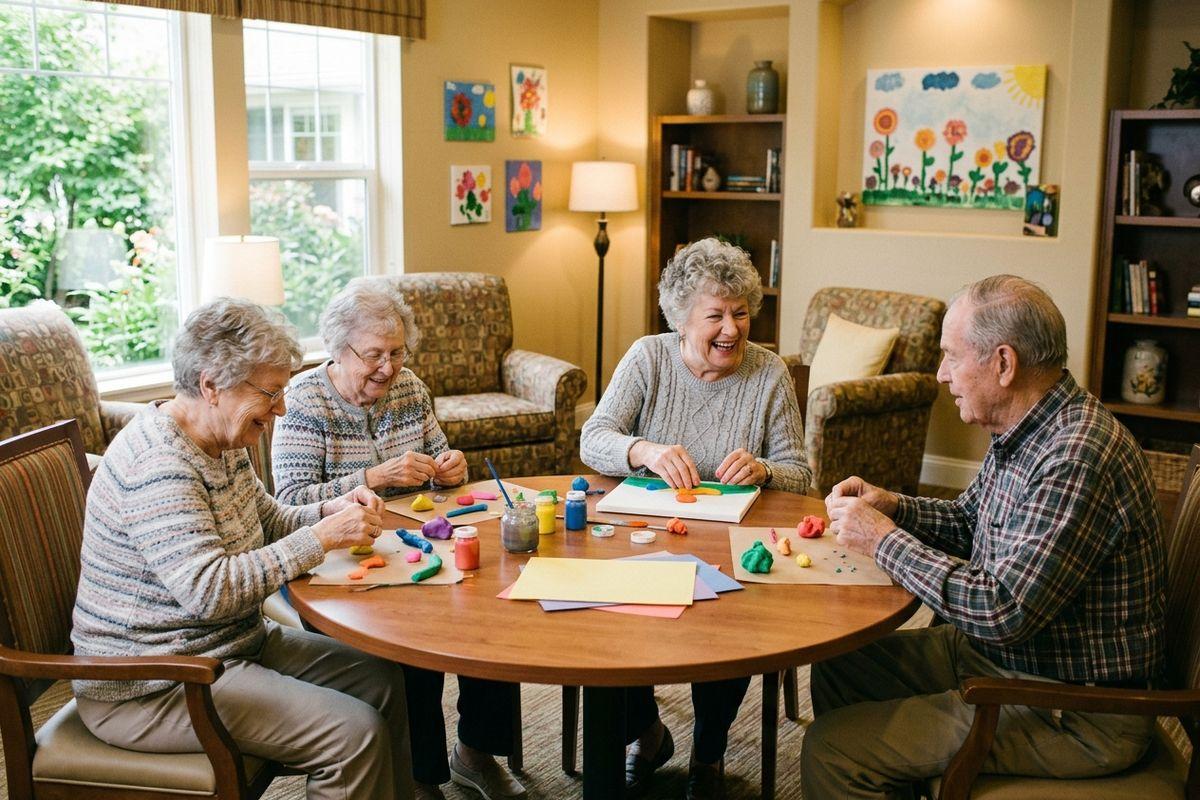
Memory care routines include opportunities for social interaction, hobbies, and meaningful activities. Music, games, crafts, and group programs help provide structure while encouraging connection with others. That keeps residents engaged without creating unnecessary overstimulation.
What a Typical Day Looks Like in Memory Care
While every memory care community structures its schedule differently, most daily routines are designed to create familiarity, comfort, and balance. Activities are typically spaced throughout the day to encourage engagement while also allowing time for rest and quiet moments.
Mornings in Memory Care
Mornings often begin with a consistent wake-up routine, followed by personal care and breakfast. Starting the day slowly and predictably can help residents feel more comfortable and prepared for the day ahead. After breakfast, many communities offer light activities like music, stretching, conversation groups, or simple games to encourage social connection while easing residents into the day.
Afternoons in Memory Care
Afternoons typically focus on engagement and activity. Residents may participate in crafts, group events, fitness programs, or other structured activities designed around their interests and abilities. Mealtimes, hydration, and quiet breaks are also built into the schedule to maintain a comfortable pace.
Evenings in Memory Care
Evenings are usually designed to feel calm and predictable. Quieter activities, softer lighting, and reduced stimulation help create a more relaxing environment as the day winds down. Residents often follow familiar evening routines that include dinner, personal care, and time to relax before bed. Consistent nighttime routines can help reduce restlessness and support a smoother transition into sleep.
The Benefits of Memory Care
Memory care communities provide specialized support designed around the needs of seniors living with dementia. In addition to structured daily routines, these communities create safe, supportive environments where residents can receive personalized assistance and meaningful engagement throughout the day.
Memory care offers:
- Structured daily routines that create consistency and familiarity
- Personalized care plans tailored to individual needs and preferences
- Safe, secure environments designed for seniors living with dementia
- Opportunities for social connection and daily engagement
- Medication management and assistance with daily activities
- Consistent caregivers who build familiarity and trust over time
- Specialized programs and activities designed for cognitive support
Together, these elements help create a supportive environment where seniors can feel more comfortable, engaged, and connected.
Finding the Right Memory Care Support for Your Loved One
Routine plays an important role in helping seniors living with dementia feel more comfortable and supported each day. Familiar schedules, meaningful activities, and consistent caregivers can help reduce stress while creating a greater sense of stability. Over time, these routines help support emotional well-being, daily participation, and a calmer overall experience.
At All American Assisted Living at Tinton Falls, memory care is built around personalized support and meaningful daily structure. Residents receive compassionate care in a comfortable environment designed to encourage connection, familiarity, and engagement throughout the day. Schedule a tour today to learn more about memory care support.